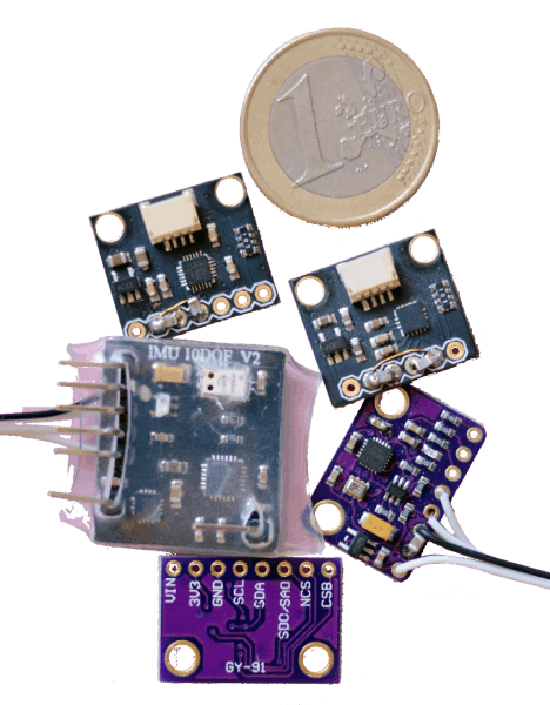
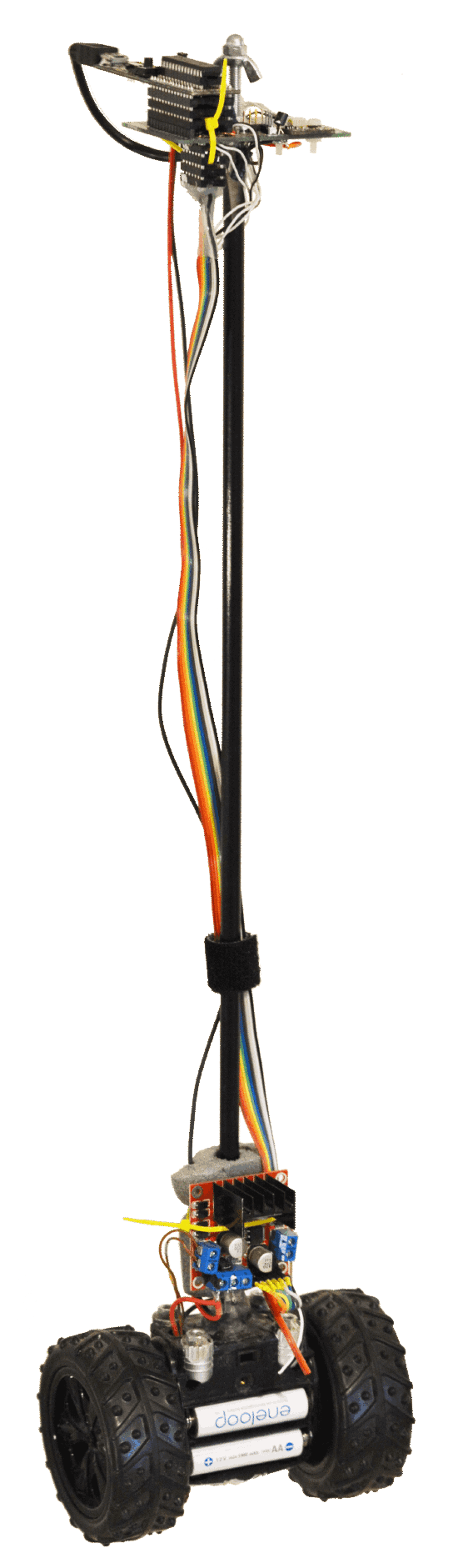
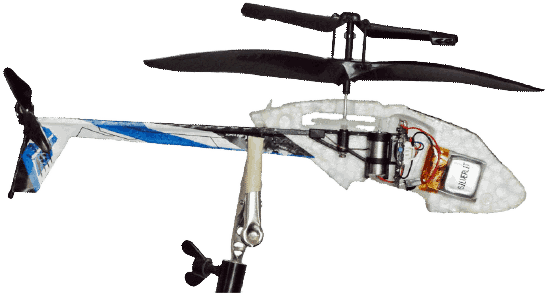
Control projects realized during my school years (1999-2005) ended-up with simple PID algorithm tuned through successive trials.
Embedded systems programming takes so much time and the time left for modeling, identification and simulation was almost null.
I started developing a blockset for Simulink targeting dsPIC 33F microcontrollers to overcome such constraint.
One push button{- C code generation,- Compilation,- Upload & run on the target.
This Model Based Design (MBD) aproach enabled efficient test with real robots of new signal processing developped in my PhD thesis on bio-robotics from 2006 to 2009.
It reduces the time from the simulation to our autonomous robot and replaced somehow our dSPACE platform.
I used the same Rapid Control Prototyping (RCP) to develop data fusion algorithm on motion analysis for wearable sports article at MOVEA in 2010-2011.
I joined Microchip Technology where I am developing the MPLAB blockset to target dsPIC and PIC32 microcontrollers.
For company, scientists, and students, rapid prototyping enables focusing on new ideas rather than getting into the details of embedded programming.
Shortening the loopback {Simulation⇔Hardware} allows improving algorithms, obtaining better results, and reducing the time to market.
The present website shares some experience through custom projects using Maltab/Simulink as Rapid Prototyping toolchain.
Examples uses the (free) Microchip blockset targeting dsPIC.
Examples are not reference design and are not endorsed by Microchip.
Interests
- Control Theory
- Embedded system
- Bodysurf
Education
Ph.D Automatic, Signal Processing & Aerial Robotics, 2009
National Center for Scientific Research (CNRS) / University Montpellier II
Master of Research - Signal Processing and Digital Communication, 2004
University of Nice Sophia-Antipolis
Engineer - System on Chip, 2004
ESIEE Paris